Space Weather Network logo

Space
Weather Network

Sun · Planets · Moons · Live Solar Activity
Advertisement 728 × 90

☀️ Live Space Weather Right Now

Current conditions on the Sun and around Earth, straight from NOAA's Space Weather Prediction Center. The scales run from 0–1 (quiet) to 5 (extreme). Everything below refreshes every few minutes.

Storm scales
Geomagnetic storms (G)
–
Loading…
Solar radiation storms (S)
–
Loading…
Radio blackouts (R)
–
Loading…
Solar wind & geomagnetic conditions
Solar wind speed
--
typical 300–500 km/s
Planetary Kp index
--
0–9 scale
Magnetic field Bz
--
southward (−) opens the shield
Solar X-ray flux
--
flare class (A B C M X)
Loading space weather…
Live imagery
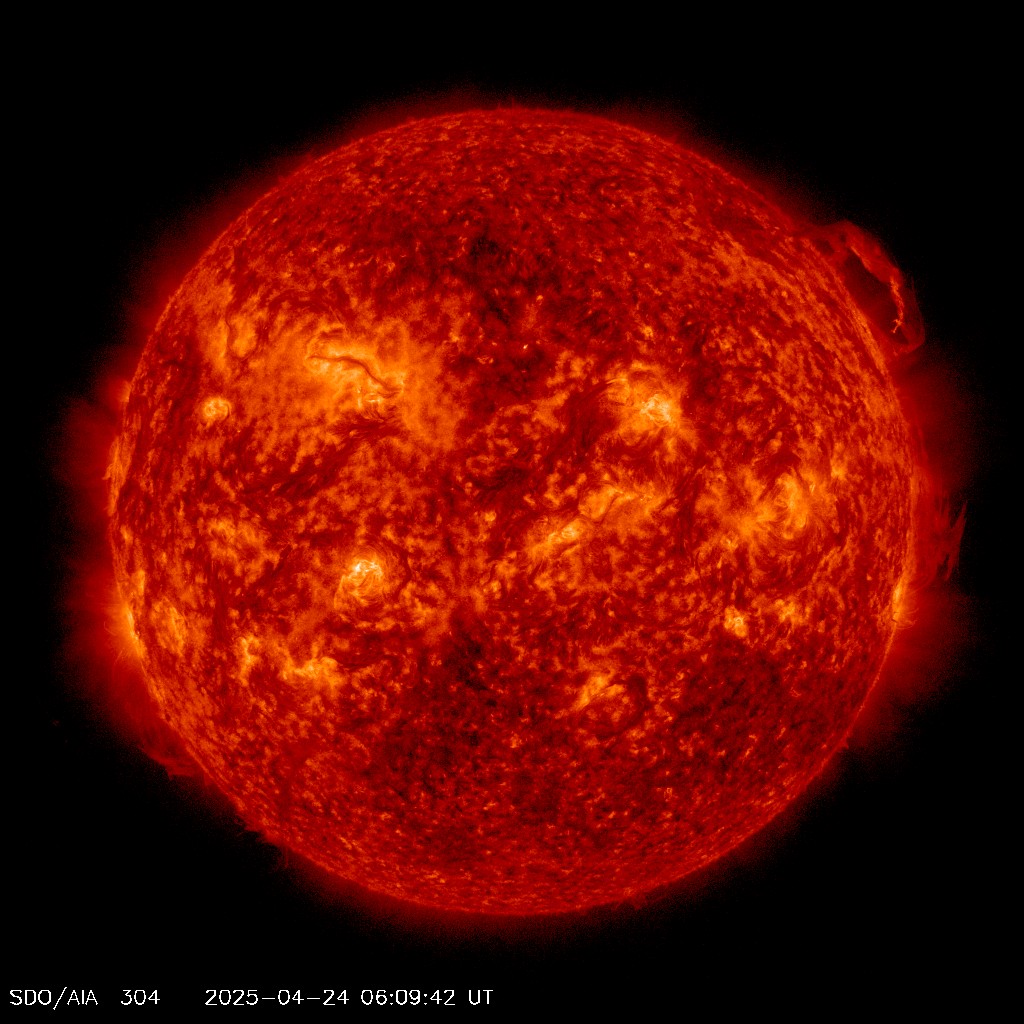
The Sun right now, imaged in extreme ultraviolet by NASA's Solar Dynamics Observatory
The Sun right nowExtreme ultraviolet (304 Å) from NASA's Solar Dynamics Observatory. Bright loops and patches mark active regions.
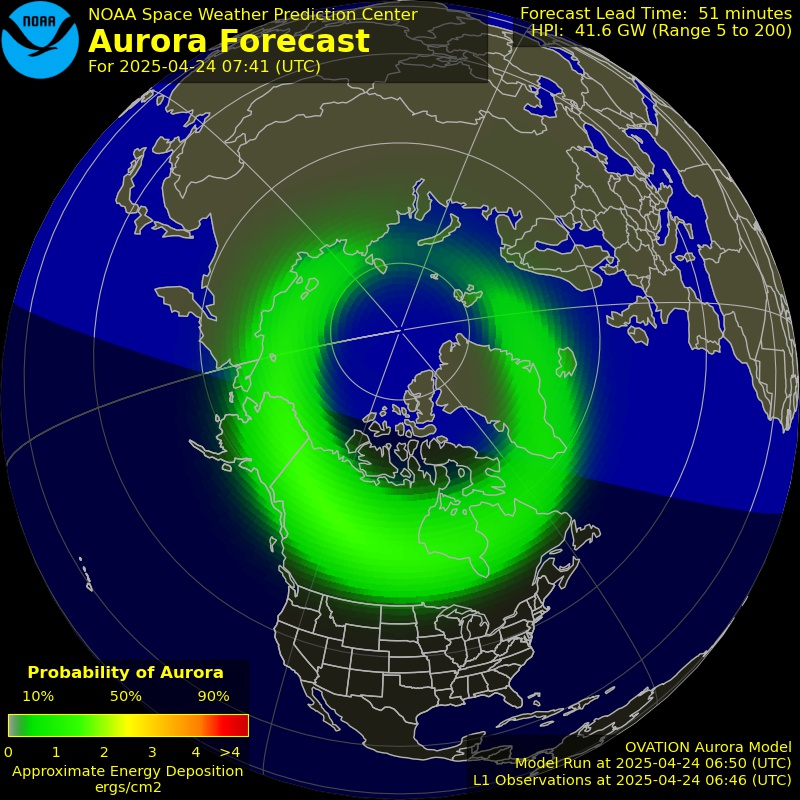
NOAA aurora forecast map for the Northern Hemisphere
Aurora forecastNorthern Hemisphere, 30-minute outlook — NOAA SWPC. Green and red show where the aurora is most likely to be seen.

🪐 The Solar System Forecast

Pick a world. These are the best-known conditions as described by planetary scientists and astronomers, from NASA, ESA and JPL missions. Gas and ice giants have no solid ground, so their temperatures are given at the 1-bar level, roughly Earth's sea-level air pressure.

🔭 Stargazing Guide

The night sky has its own weather: clouds, moonlight, haze and light pollution decide what you can see. Here is what to look for — the constellations, the Milky Way, glowing nebulae and the annual meteor showers — and how to find them.

Sky conditions that matter

🌑 The MoonA bright Moon washes out faint objects. Plan Milky Way and nebula nights for the days around New Moon.
☁️ Clouds & transparencyClear, dry air after a cold front is often the most transparent. Humidity and haze dim faint objects even when no clouds show.
🌬️ SeeingSteady air gives sharp, still stars. Twinkling means turbulence — good for the eye, harder for telescopes at high power.
🏙️ Light pollutionThe Bortle scale runs from 1 (pristine dark sky) to 9 (inner city). The Milky Way needs about Bortle 4 or darker; about a third of humanity can no longer see it.
👀 Dark adaptationGive your eyes 20–30 minutes in the dark. Use a red light, avoid phone glare, and look slightly to the side of faint objects (averted vision).
🔭 Binoculars firstA pair of 7×50 or 10×50 binoculars shows star clusters, nebulae, Andromeda, the Pleiades and Jupiter's moons — no telescope needed.

Constellations by season

Constellations are patterns, but the sky they sit on is real: the Earth's yearly orbit means each season shows a different slice of the heavens. These are the evening skies from the Northern Hemisphere; Southern Hemisphere observers see the seasons reversed and a different sky altogether, including the Southern Cross.

❄️ Winter

Dec – Feb evenings

Orion, Taurus (with the Pleiades), Gemini, Auriga, Canis Major with Sirius, the brightest star in the night sky. The Winter Hexagon fills the south.

🌱 Spring

Mar – May evenings

Leo, Virgo with Spica, Boötes with orange Arcturus, Ursa Major riding high. Galaxy season: Leo and Virgo are rich in distant galaxies.

☀️ Summer

Jun – Aug evenings

Scorpius and Sagittarius low in the south, with the Milky Way's core. The Summer Triangle: Vega (Lyra), Deneb (Cygnus) and Altair (Aquila).

🍂 Autumn

Sep – Nov evenings

The Great Square of Pegasus, Andromeda and its galaxy, Cassiopeia, Perseus and the Double Cluster. The sky is sparse, but the Andromeda Galaxy is the highlight.

⭐ All year (north)

Circumpolar — never sets

Ursa Major and Ursa Minor, Cassiopeia, Cepheus and Draco circle Polaris, the North Star, which sits almost exactly above the Earth's north pole.

🌏 Southern sky

Best Apr – Sep evenings

Crux (the Southern Cross), Centaurus with Alpha Centauri (the nearest star system, 4.4 light-years), Carina and the Magellanic Clouds, two satellite galaxies of the Milky Way.

Seven constellations to learn first

🌌 Our home galaxy: the Milky Way

When you see the Milky Way, you are looking edge-on into the disc of our own galaxy from the inside. It is a barred spiral about 100,000 light-years across, with an estimated 100–400 billion stars. The Sun sits about 26,000 light-years from the centre, in a minor spiral arm called the Orion Spur, and takes roughly 230 million years to complete one orbit. At the centre lies the supermassive black hole Sagittarius A*, about 4 million times the Sun's mass, imaged by the Event Horizon Telescope in 2022.

Core season (north)
Feb – Oct
best Jun–Aug, low in the south
Core season (south)
Apr – Oct
overhead around June–July
Best sky
Bortle 1–3
New Moon, after astronomical twilight
Photo starting point
15–20 s
wide lens, f/2.8, ISO 3200, tripod

The "winter Milky Way" through Cassiopeia, Perseus, Auriga and Orion looks the other way, out toward the galaxy's faint outer edge, so it is dimmer but still beautiful from a dark site.

✨ Nebulae, clusters and galaxies

Nebulae are clouds of gas and dust where stars are born or have died. Most look like faint grey smudges through a telescope — the colour in photographs comes from long exposures. The tags show the simplest way to see each one.

☄️ Annual meteor showers

Meteor showers happen when Earth ploughs through the trail of dust left by a comet (or, rarely, an asteroid). They return on nearly the same dates every year. Watch after midnight, lie back with a wide view of the sky, and give your eyes 20 minutes.

ShowerPeakTypical rate*Parent body

*Meteors per hour for one observer under a dark sky with the radiant overhead. Real counts are usually lower. Moonlight can hide the fainter ones; check the Moon phase for the peak night.

🪨 The Asteroid Belt

Between the orbits of Mars and Jupiter lies a broad ring of rocky and metallic leftovers from the birth of the solar system. Jupiter's gravity kept them from ever forming a planet. It is not the crowded minefield of the movies — spacecraft cross it routinely.

Location
2.2 – 3.2 AU
330–480 million km from the Sun
Total mass
≈ 3% of the Moon
Ceres is about 40% of it
Asteroids over 1 km
1–2 million
millions more are smaller
Typical spacing
≈ 1 million km
about 2.5× the Earth–Moon distance
Temperature
−70 to −110 °C
cold, airless, sunlit rock
Orbit time
3 – 6 years
around the Sun

Pictures from the belt

Conditions in the belt

Weather

Asteroids have no atmosphere and no wind, so there is no weather as we know it. A sunlit surface is a few tens of degrees below freezing near the middle of the belt, and plunges colder in shadow. Small asteroids spin quickly, so their surface heats and cools every few hours.

The exception is Ceres, the dwarf planet. It is cold enough for water ice to survive just beneath the surface, and it emits faint water vapour. Bright salt deposits in Occator Crater, found by NASA's Dawn spacecraft, are left by briny water that seeped up from below.

Space weather in the belt

The solar wind and cosmic rays sweep across the belt without any magnetic field to deflect them, slowly darkening and "weathering" asteroid surfaces. Impacts constantly create dust, and the largest collisions create asteroid families of fragments that share a similar orbit.

Gaps called Kirkwood gaps appear where Jupiter's gravity repeatedly tugs asteroids out of orbit, like pushes on a swing at just the right rhythm.

Belt, Trojans and near-Earth asteroids

The main belt is only one family. Jupiter Trojans share Jupiter's orbit in two swarms. Near-Earth asteroids, like Eros, Bennu and Apophis, have been nudged inward into orbits that cross or approach Earth's, and are watched closely by NASA's planetary defence programme.

Missions

Dawn orbited Vesta (2011–12) and Ceres (2015–18). Psyche, launched in 2023, is heading to a metal-rich asteroid and arrives in 2029. Lucy is touring Jupiter's Trojans, with encounters from 2027 on. DART shifted the orbit of the moonlet Dimorphos in 2022, and ESA's Hera arrives to study the aftermath.

Asteroid & spacecraft calendar, 2026–2031

DateEventDetails

🌍 Next 10 Near-Earth Asteroid Passes

Near-Earth asteroids are rocks whose orbits bring them close to Earth's. The ten below are the next to pass within 0.05 AU of us (about 7.5 million km or 4.6 million miles, which is 19.5 times the distance to the Moon). None of them will hit Earth. Every one is a miss, and the distances come from NASA/JPL's orbit calculations. Asteroids this small are far too faint to see without a large telescope, and nothing in space is close enough to photograph in detail, so each pass is shown as a trajectory diagram instead.

Loading the next close approaches from NASA…

How to read the diagrams

Close-approach view (left)

You are looking down on Earth, shown at the center. The rings are distances from Earth on a compressed scale: the ring of geostationary satellites (0.11 lunar distance), the Moon's orbit (1 lunar distance, 384,400 km), and 5, 10 and 20 times that. The orange dot is the asteroid at its closest point, and the arc with the arrow shows which way it moves past. The yellow arrow on the left edge points toward the Sun. The side the asteroid passes on is approximate, but the distance is exact.

Orbit view (right)

Here you look down on the solar system from above. Earth's orbit is the blue circle and the asteroid's orbit is the colored oval, with the part of each path in the month around the encounter drawn thicker. The two dots are where Earth and the asteroid are on the day of the pass. The orbits are drawn from NASA's orbital elements; the asteroid's path is tilted relative to Earth's, so a crossing on the diagram does not mean a collision.

What the orbit classes mean

Apollo: crosses Earth's orbit but spends most of its time farther from the Sun than Earth does. Aten: crosses Earth's orbit but spends most of its time inside it. Amor: stays just outside Earth's orbit and approaches it. Atira: orbits entirely inside Earth's orbit.

"Potentially hazardous"

NASA labels an asteroid potentially hazardous when it is larger than about 140 m and can pass within 0.05 AU of Earth's orbit. It is a way to prioritize tracking, not a prediction: no known asteroid is forecast to hit Earth in the next century. Small asteroids (under about 25 m) usually burn up in the atmosphere if they ever do arrive.

Data: NASA/JPL Center for Near Earth Object Studies close-approach table and Small-Body Database, refreshed every few hours. Sizes are measured when known; otherwise they are estimated from brightness and shown as a range, because the rock's reflectivity is unknown. Passage times and distances can shift slightly as new observations refine each orbit, especially for objects seen only a few times. Full NASA close-approach table · NASA Eyes on Asteroids (3D)

☄️ Comets

Comets are frozen leftovers from the outer solar system: a few kilometres of ice, dust and rock. When one nears the Sun, sunlight vaporises the ice, forming a glowing cloud (the coma) and tails that always point away from the Sun, whichever way the comet is moving.

Comet "weather"

A comet's weather is driven by sunlight. Beyond Jupiter it is a dark, frozen body. Closer in, ices sublimate straight to gas, jets erupt from cracks, and the nucleus can outburst or break apart. Two tails form: a straight blue ion tail of gas pushed by the solar wind, and a curved, yellowish dust tail of grains blown by sunlight. A solar storm can snap the ion tail off in a "disconnection event".

Where they come from

Short-period comets (under 200 years), like Halley (76 years) and Encke (3.3 years), come mostly from the Kuiper Belt beyond Neptune. Long-period comets fall in from the distant Oort Cloud and may not return for thousands of years. Comets called sungrazers pass very close to the Sun and often do not survive.

Great comets are unpredictable

A comet's brightness is the hardest thing in astronomy to forecast. Hale–Bopp (1997), NEOWISE (2020) and Tsuchinshan–ATLAS (2024) became spectacular; others, such as the sungrazer C/2026 A1 (MAPS), which broke apart in April 2026, fade or disintegrate. The interstellar comet 3I/ATLAS visited in 2025 and has now left.

How to watch

Most comets need binoculars or a small telescope and a dark sky. Look for a fuzzy, slightly out-of-focus "star". Use a free sky chart app to find coordinates, as predicted brightness is often given as a magnitude: 6 is the limit of the naked eye in dark skies; smaller numbers are brighter.

Comet schedule, now through 2031

The dates below are perihelion (closest to the Sun) or the best-viewing window. Brightness is the predicted peak magnitude, and these predictions can change. This list is based on the British Astronomical Association's published comet prospects and orbit data as of October 2026.

WhenCometHow to see itWhat to expect
Tip: New comets are discovered every month, and the ones that become brilliant are often found only a year or less before. Check the schedule above for the periodic comets we can predict, and watch the news for surprises. For live positions and magnitudes, see the Minor Planet Center, the British Astronomical Association comet section, or COBS.

📊 World vs. World

Typical conditions side by side. Tap a world's name to jump to its full forecast.

WorldTemperatureAtmosphereWindSignature weatherDay length

📟 How Space Weather Is Rated

NOAA grades space weather on three five-step scales, similar to the way hurricanes and tornadoes are rated. The live numbers above use these.

G — Geomagnetic storms

Disturbances of Earth's magnetic field, driven by the solar wind and CMEs. Brings auroras.

  1. G1Minor: weak grid fluctuations; aurora at high latitudes
  2. G2Moderate: aurora to ~55° latitude
  3. G3Strong: GPS and radio glitches; aurora to ~50°
  4. G4Severe: voltage-control problems; aurora to ~45°
  5. G5Extreme: possible grid collapse; aurora to the tropics

S — Solar radiation storms

Fast, energetic particles from the Sun. A risk to astronauts, satellites and polar flights.

  1. S1Minor: minor polar HF radio effects
  2. S2Moderate: small radiation risk for high-flying crews
  3. S3Strong: radiation hazard for astronauts on spacewalks
  4. S4Severe: satellite damage; HF radio blackout in polar regions
  5. S5Extreme: high radiation risk; satellites may be lost

R — Radio blackouts

Caused by solar flare X-rays that disturb Earth's upper atmosphere on the sunlit side.

  1. R1Minor (M1 flare): weak HF radio degradation
  2. R2Moderate (M5): limited HF blackout for tens of minutes
  3. R3Strong (X1): wide-area HF blackout for about an hour
  4. R4Severe (X10): HF blackout for 1–2 hours
  5. R5Extreme (X20+): complete HF blackout for hours

📧 Weather Today by Email

Get a one-page morning briefing for your own backyard — today's Earth forecast and any active alerts — delivered every day at 6:00 AM in your own time zone.

We never sell your data. See our Privacy Policy and Do Not Sell My Data form.